Rare Critters of Lembeh: Rhinopias
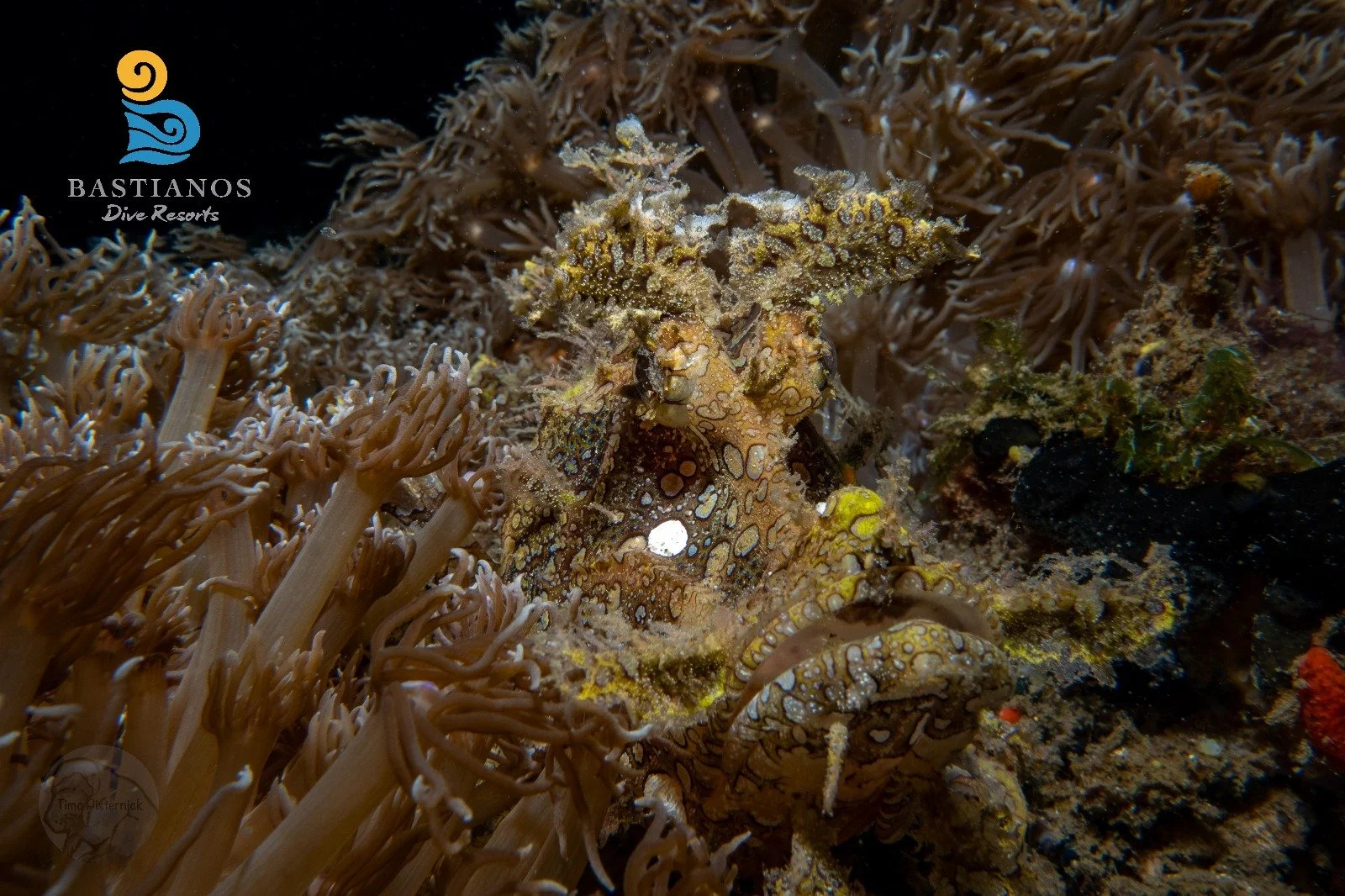
The Lembeh Strait is famous for its weird, wonderful, and wildly colorful marine life—but few critters stir up as much excitement as the Rhinopias. Often referred to as the “Holy Grail” of underwater photography, these elusive scorpionfish have an almost mythical status among divers. You’ll understand why when one is spotted: a once-quiet dive site can suddenly turn into a flurry of bubbles and camera strobes as underwater photographers rush in to capture the moment.
What Makes Rhinopias So Special?
Rhinopias belong to the scorpionfish family, yet they look nothing like the typical reef scorpionfish most divers know. While their relatives are usually camouflaged in muted tones, Rhinopias show off vibrant colors—brilliant pinks, fiery reds, glowing yellows, and rich purples. Despite these bold hues, they’re remarkably difficult to find. Their laterally compressed bodies and elaborate, weed-like appendages help them blend seamlessly into algae, rubble, or soft coral. Only when they settle on open sand does their outline become obvious—if you’re lucky enough to be looking at just the right moment.
Two Rare Species in Lembeh
Lembeh is home to two highly sought-after species:
Weedy Scorpionfish (Rhinopias frondosa)
Paddleflap Scorpionfish (Rhinopias eschmeyeri)
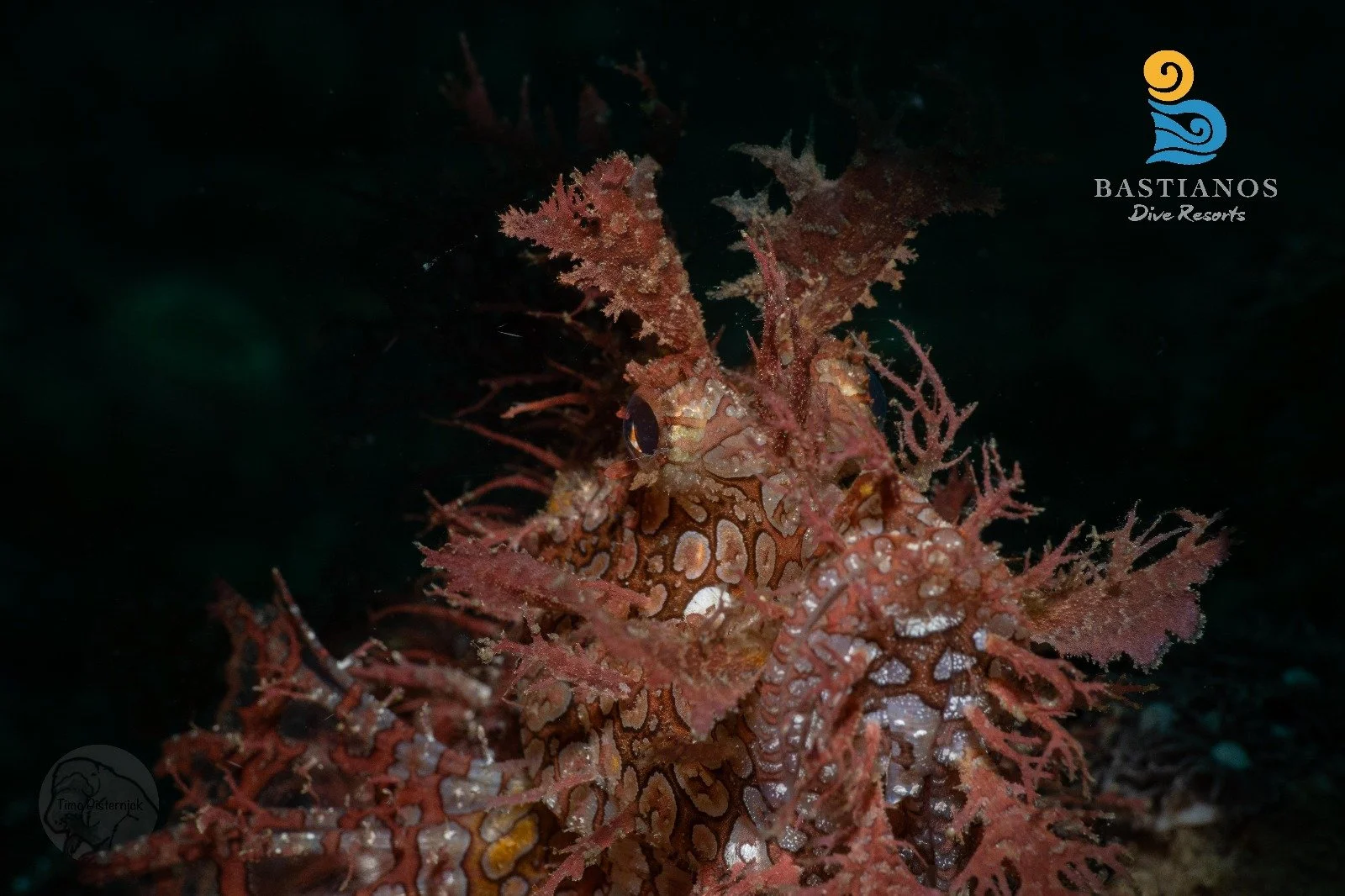
Weedy Scorpionfish (Rhinopias frondosa)
The weedy scorpionfish is spotted occasionally throughout the year, but R. eschmeyeri is a true rarity here, with only a handful of sightings annually. Part of this scarcity comes down to depth preference—R. eschmeyeri tends to inhabit deeper zones than its weedy counterpart, making encounters less frequent.
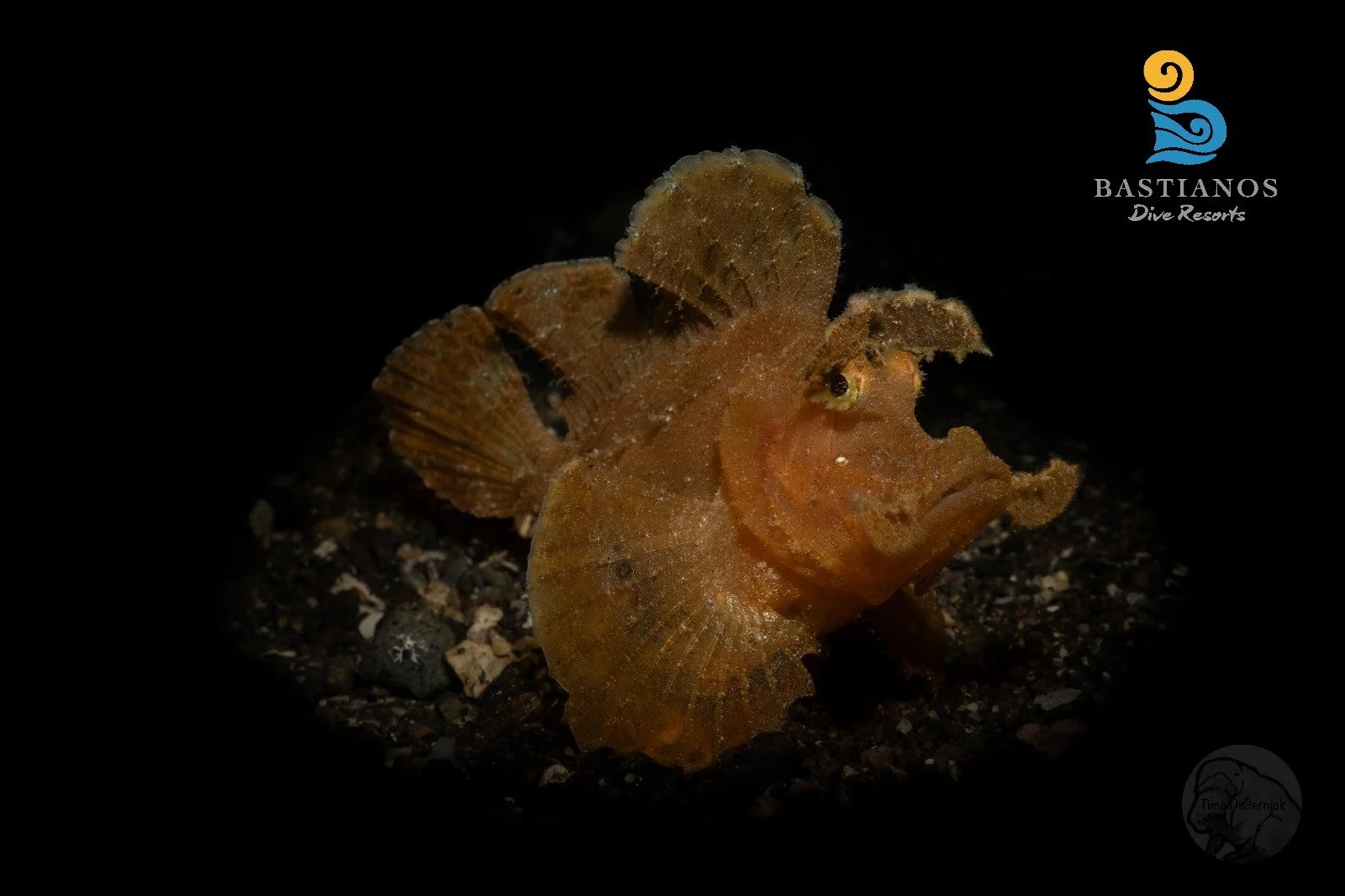
Paddleflap Scorpionfish (Rhinopias eschmeyeri)
Behavior: Perfect for Underwater Photography
Like frogfish, Rhinopias are ambush predators. They rarely swim, preferring to “walk” or “hop” along the bottom with their fins before settling perfectly still to wait for unsuspecting prey. This stationary behavior makes them ideal subjects for photographers:
Macro enthusiasts love their delicate filaments, textures, and facial details.
Close-focus wide-angle shooters enjoy creating dramatic portraits showing both the fish and its environment.
But capturing the perfect shot is still a challenge. Their complex textures require thoughtful lighting, and their camouflage means they often remain half-hidden in their surroundings.
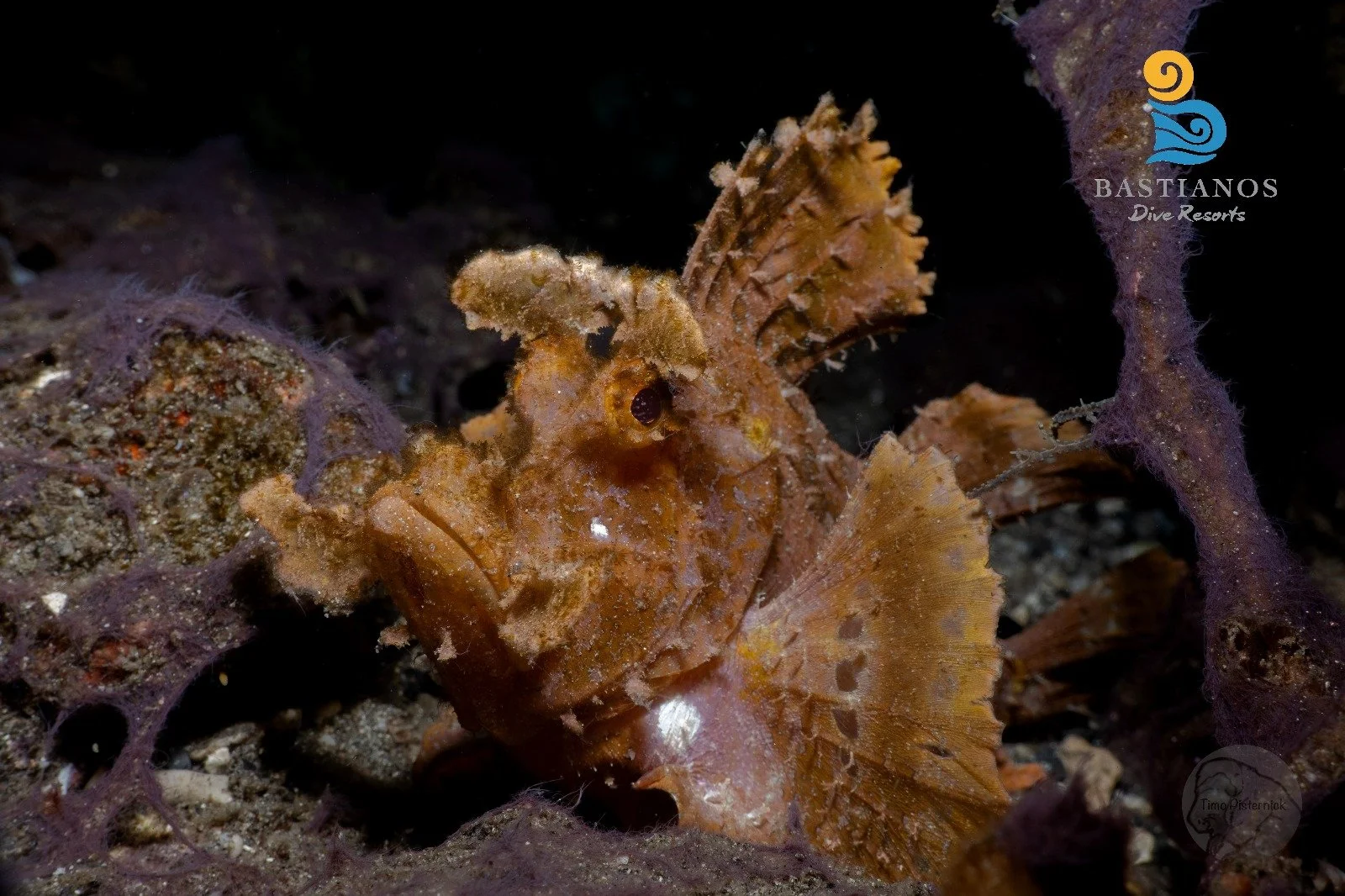
Why Rhinopias Are the “Holy Grail”
Rhinopias have earned their reputation for several reasons:
Extreme rarity—they’re not found in many places, and even in Lembeh they’re never guaranteed.
Striking appearance—no two individuals look alike, with constantly varying colors and unique appendages.
Photographic value—their unusual shape and behavior create truly unforgettable images.
Diver excitement—few critters generate more buzz on a boat briefing than the words: “We found a Rhinopias.”
For many underwater photographers, finally encountering one feels like ticking off a once-in-alifetime goal.
Author: Timo Pisternick (Manager Bastianos Froggies Lembeh)