

The Abalone (Haliotis)
While live abalones (Haliotis) are masters of hiding beneath rocks and rarely spotted by divers, their iridescent mother-of-pearl shells are a more common underwater find. Discover fascinating facts about this elusive marine snail and how it feeds on the reef.
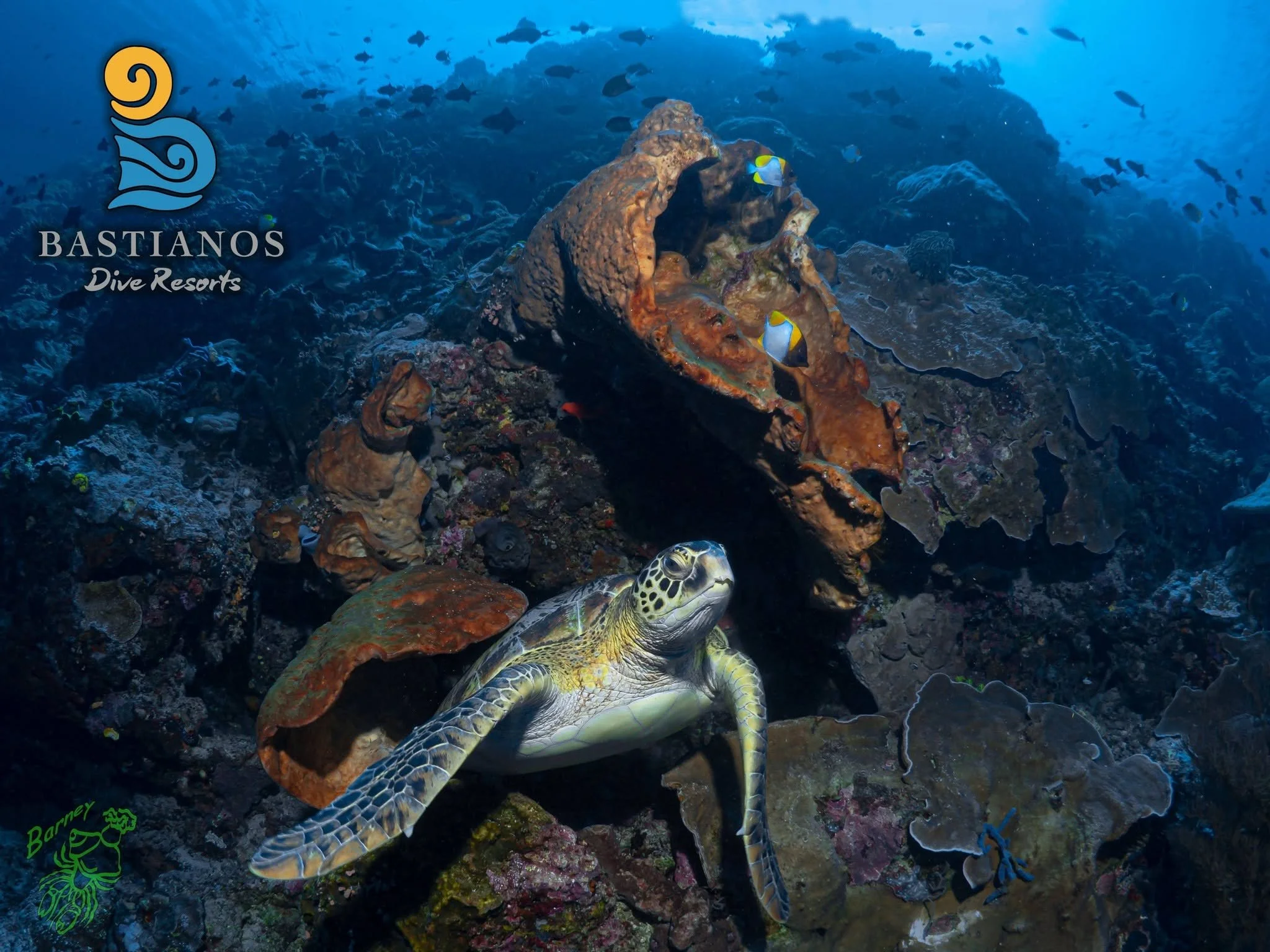
Countless Sea Turtles around Bunaken Marine Park
Discover why diving in North Sulawesi means swimming alongside countless sea turtles on almost every dive. From gliding over Bunaken’s dramatic coral walls to spotting green and hawksbill turtles resting on the reefs, see what makes these waters a true turtle paradise.

The Blue-ringed Octopus (Octopus maculosus)
The Blue-ringed Octopus (Octopus maculosus) relies on camouflage and only flashes its iconic blue rings when agitated or threatened. Learn more about this cautious, venomous macro favorite spotted by our divers in North Sulawesi.

Rare Critters of Lembeh: Rhinopias
The Lembeh Strait is world-famous for its weird, wonderful, and wildly colorful marine life — but few critters stir up as much excitement as the Rhinopias. Often referred to as the “Holy Grail” of underwater photography, these elusive scorpionfish draw divers and photographers alike — a rare sight that can turn a quiet muck-dive site into a frenzy of bubbles and strobes

Painted Frogfish
Even as a tiny juvenile measuring just 2–3 mm, the Painted Frogfish (Antennarius pictus) comes fully equipped with a built-in “fishing rod” (illicium) and suction-mouth mechanism, making it a highly effective ambush predator of small fish and shrimps.

The Xenia Shrimp (Alcyonohippolyte commensalis)
The Xenia Shrimp (Alcyonohippolyte commensalis) is perfectly adapted to its environment. Found exclusively among colonies of Xenia soft corals, its coloration blends so well that it’s nearly invisible — only becoming noticeable when the coral polyps retract.

Chromodoris Annae
The rear view of the Nudibranch (Chromodoris annae) is equally captivating, revealing its vibrant orange gill tuft, the undulating yellow edge of its mantle, a blue body adorned with black stripes, and the tip of its yellow foot in clear detail.

Little Jorunna
The rear view of the Nudibranch (Chromodoris annae) is equally captivating, revealing its vibrant orange gill tuft, the undulating yellow edge of its mantle, a blue body adorned with black stripes, and the tip of its yellow foot in clear detail.

Shorthead Fangblenny
The Shorthead Fangblenny (Petroscirtes breviceps) its just a little bit poisonous, but it mimics its relatives from the genus Meiacanthus. These got an even stronger poison at their large saber teeth and are therefore avoided by most predators. P. breviceps only uses its poison for defense. It feeds mainly on algae and diatoms, which it scrapes off the substrate. The slender fish, which grows to 11 cm, likes to hide in holes, such as beer bottle necks, as it is often found in calm, sediment-rich bays.